
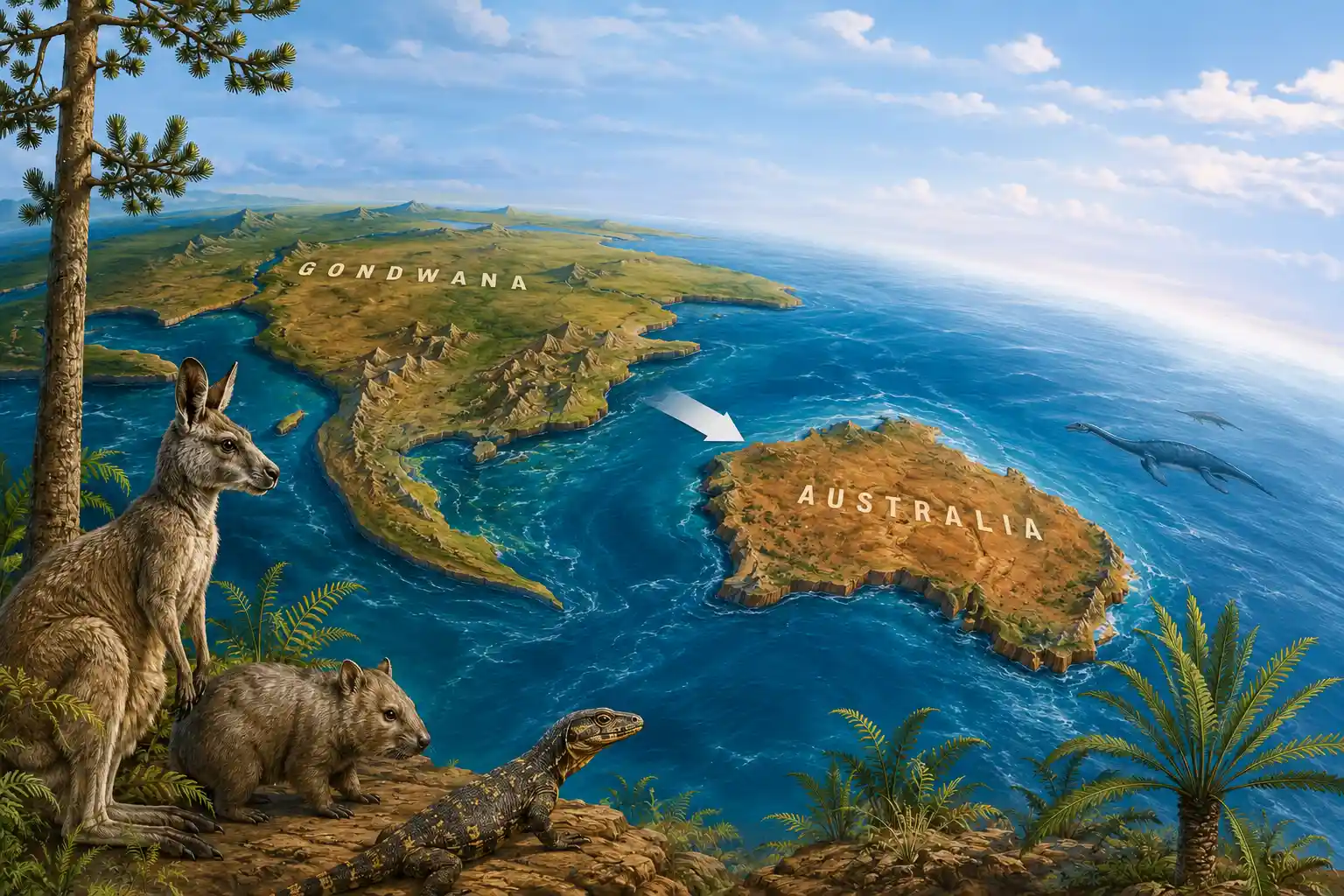
Australia is unique because it is both a nation and a continent. But how did it become separate from the rest of the world?
Millions of years ago, Earth looked very different. The continents were connected as part of giant landmasses that slowly shifted over time.
Scientists explain these movements through a process called plate tectonics. Massive pieces of Earth's crust move very slowly across the planet.
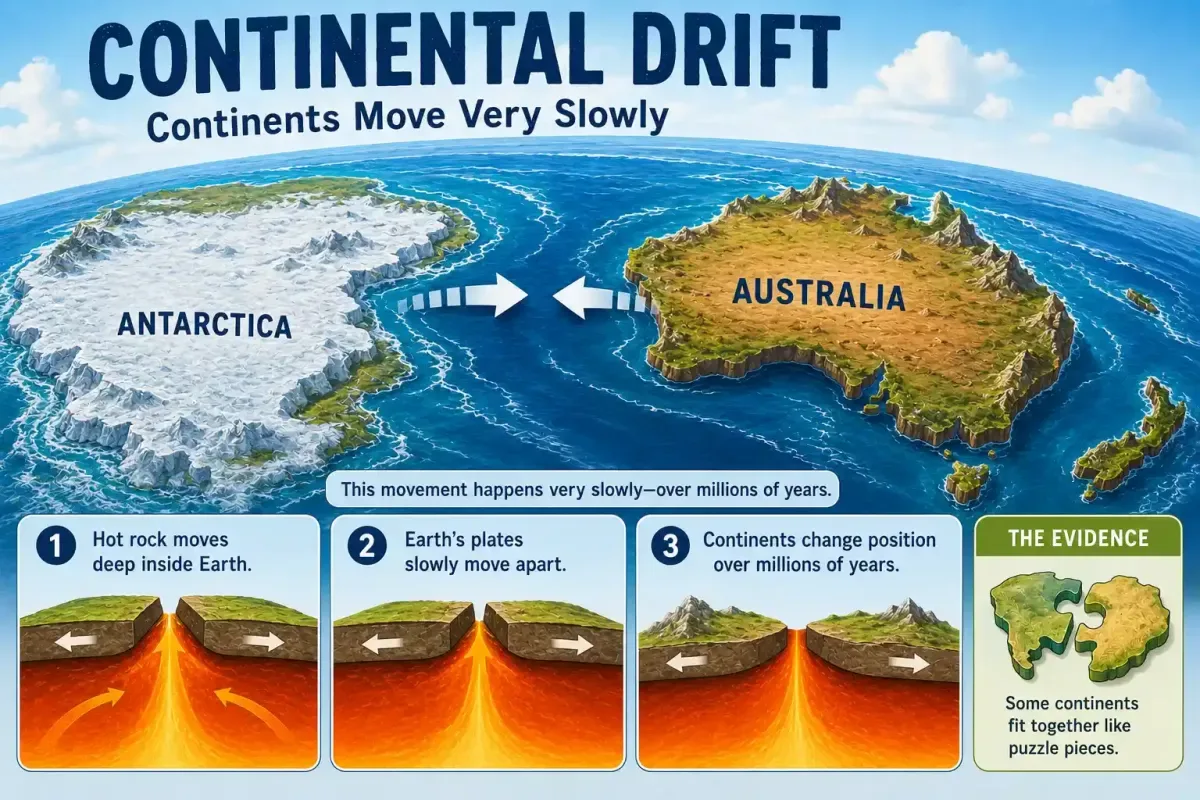
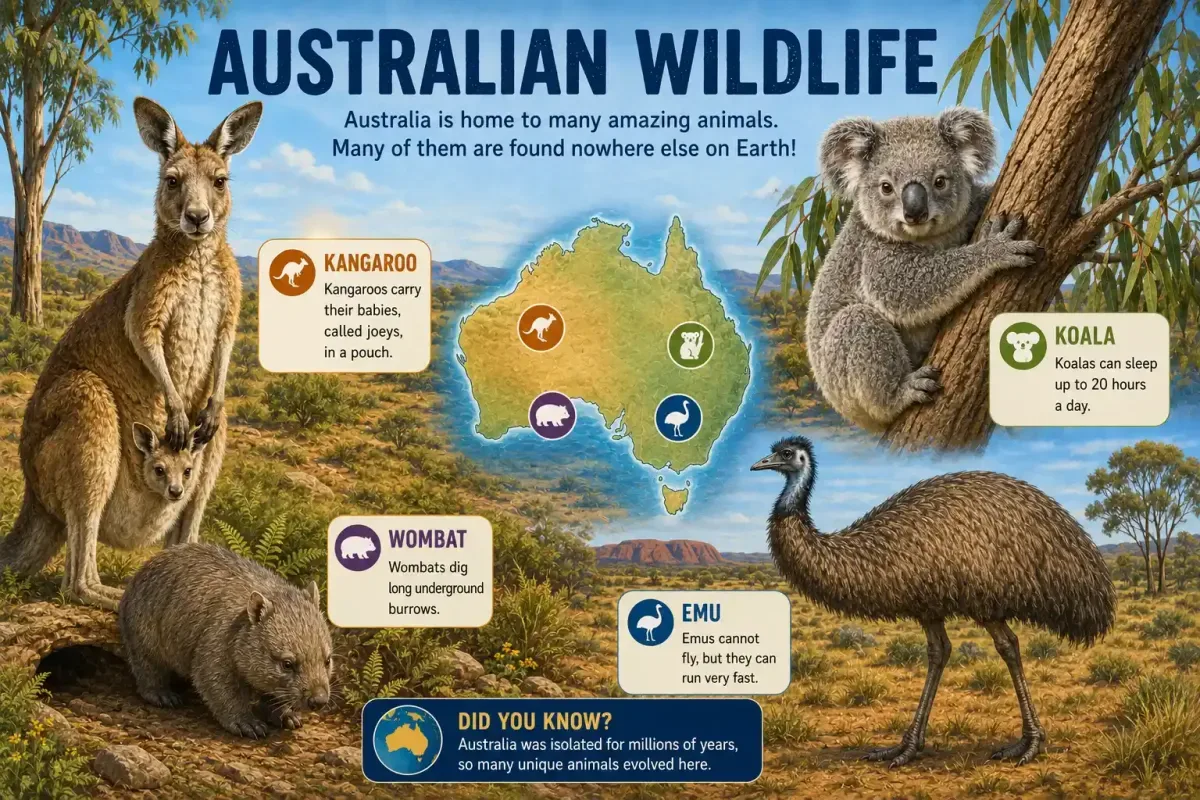
As Australia drifted away from other continents, many plants and animals evolved independently. This is why Australia is home to species that are found nowhere else.
Kangaroos, wombats, koalas, and many other animals developed in isolation over millions of years.
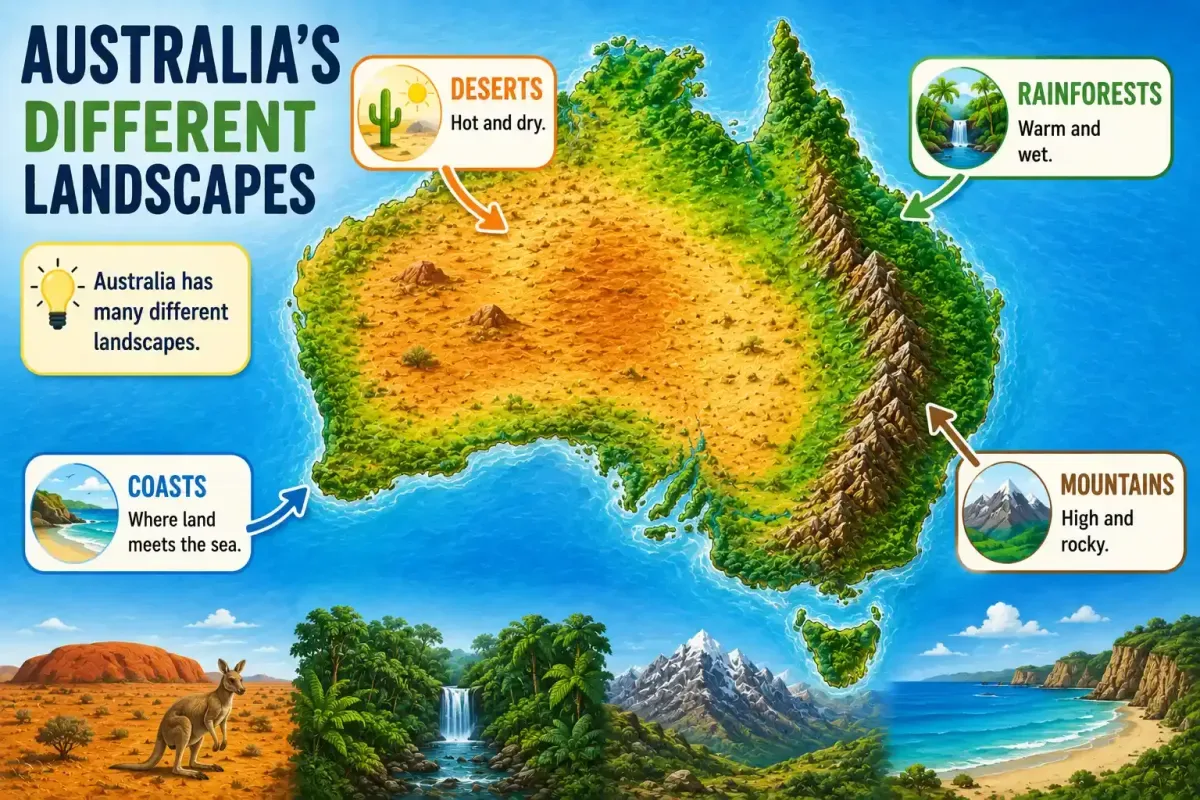
Australia's geography is also diverse. The continent contains deserts, tropical rainforests, mountain ranges, grasslands, and thousands of miles of coastline.
Understanding Australia's history helps us learn how Earth's continents formed and why different regions of the world have unique landscapes and wildlife.
Australia's story is a fascinating example of how geography, geology, and biology work together to shape our planet.