

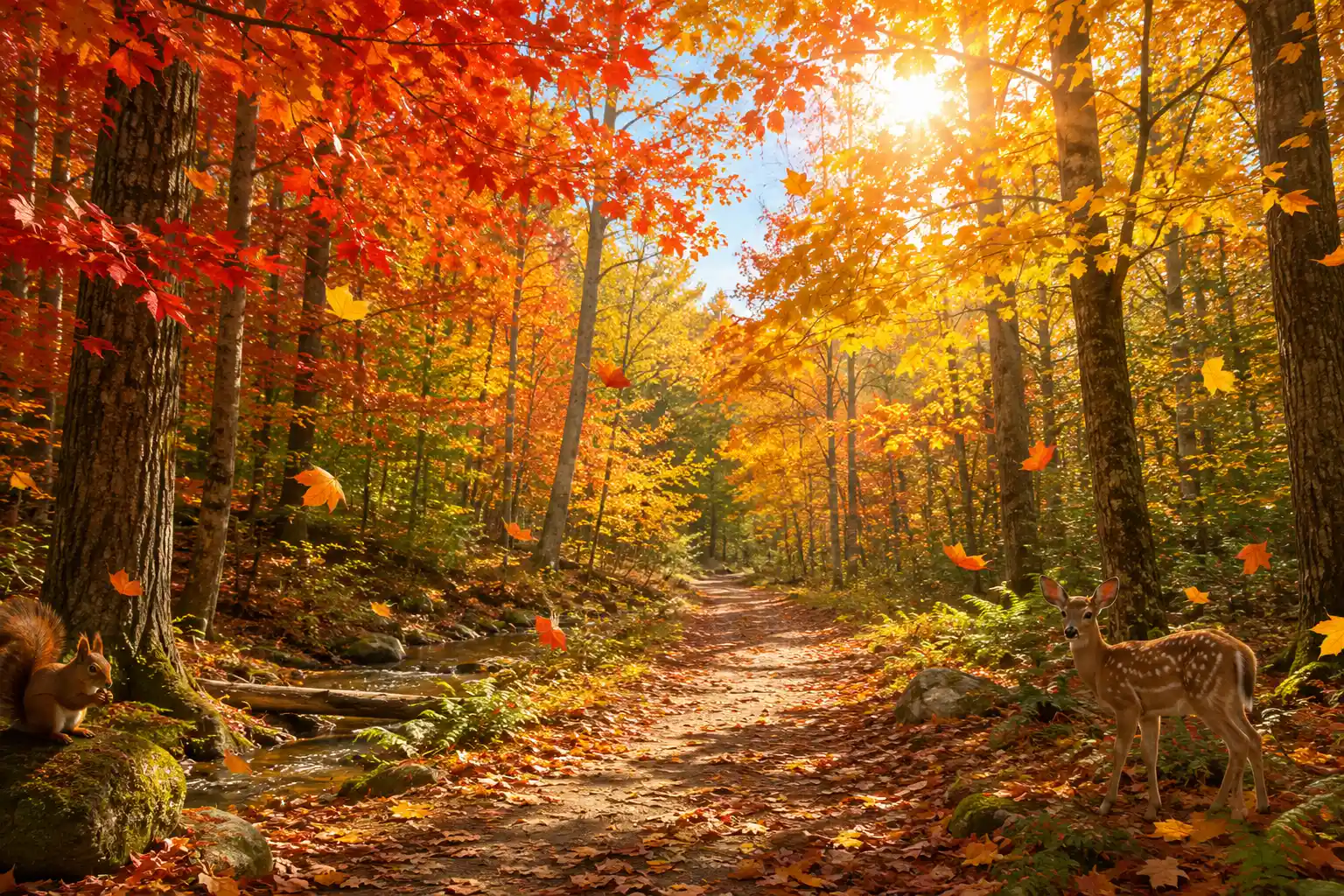
Have you ever looked at a tree in autumn and wondered why its leaves change color?
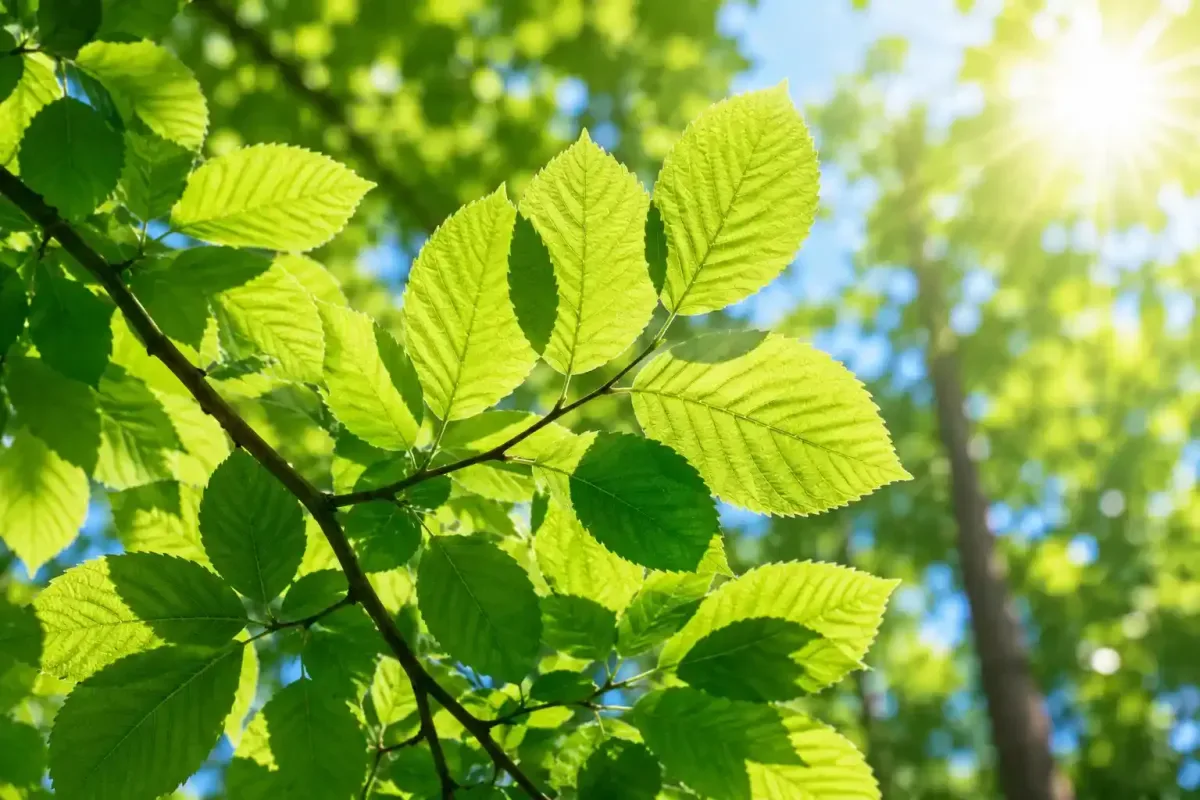
During spring and summer, most leaves are green. That green color comes from something called chlorophyll.
Chlorophyll helps plants use sunlight to make food.
Trees need lots of food to stay healthy and grow.
As autumn arrives, the days become shorter.
Trees notice there is less sunlight.
To prepare for winter, many trees begin to slow down.
They stop making as much chlorophyll.
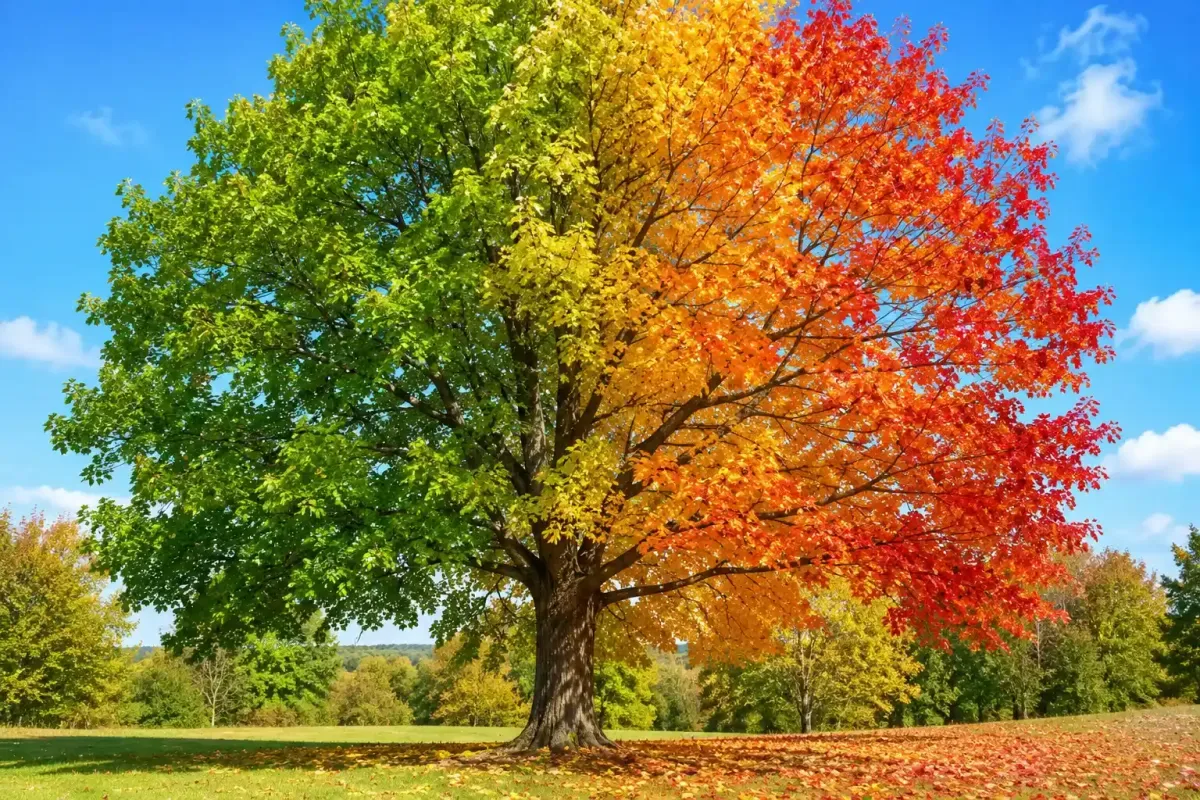
When the green color fades away, other colors hidden inside the leaves begin to appear.
Yellow and orange colors become visible.
Some trees even produce bright red colors.
Different kinds of trees create different colors.
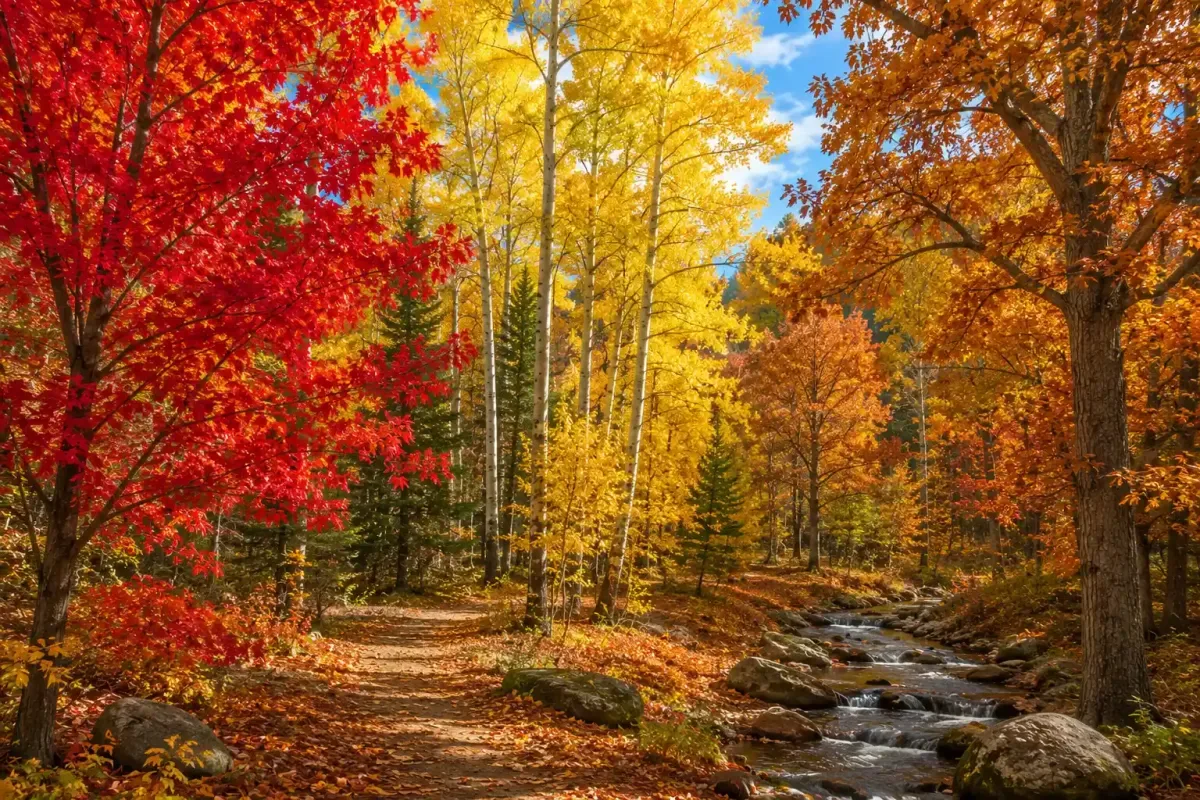
Maple trees often turn bright red.
Aspen trees usually become golden yellow.
Oak trees can turn brown, red, or orange.
The weather also plays a role.
Sunny days and cool nights often help create the brightest autumn colors.
Eventually, many leaves fall to the ground.
This helps trees save energy during winter.
When spring returns, new leaves grow and the cycle begins again.
So the next time you see colorful autumn leaves, remember that you are watching a clever survival strategy created by nature.
Fun Nature Fact
Some trees can live for hundreds of years and experience hundreds of autumn seasons.
Great Job!
You reached the end of today's learning adventure!