


On a bright sunny day, the sky looks like a giant blue blanket stretching over the whole world. It is one of the first things we notice when we go outside. But have you ever wondered why it is blue instead of green or purple?
It is a question that has amazed people for hundreds of years. The answer begins with sunlight and the air all around us. Together, they create the beautiful blue sky we see almost every day.
The Sun Gives Us White Light
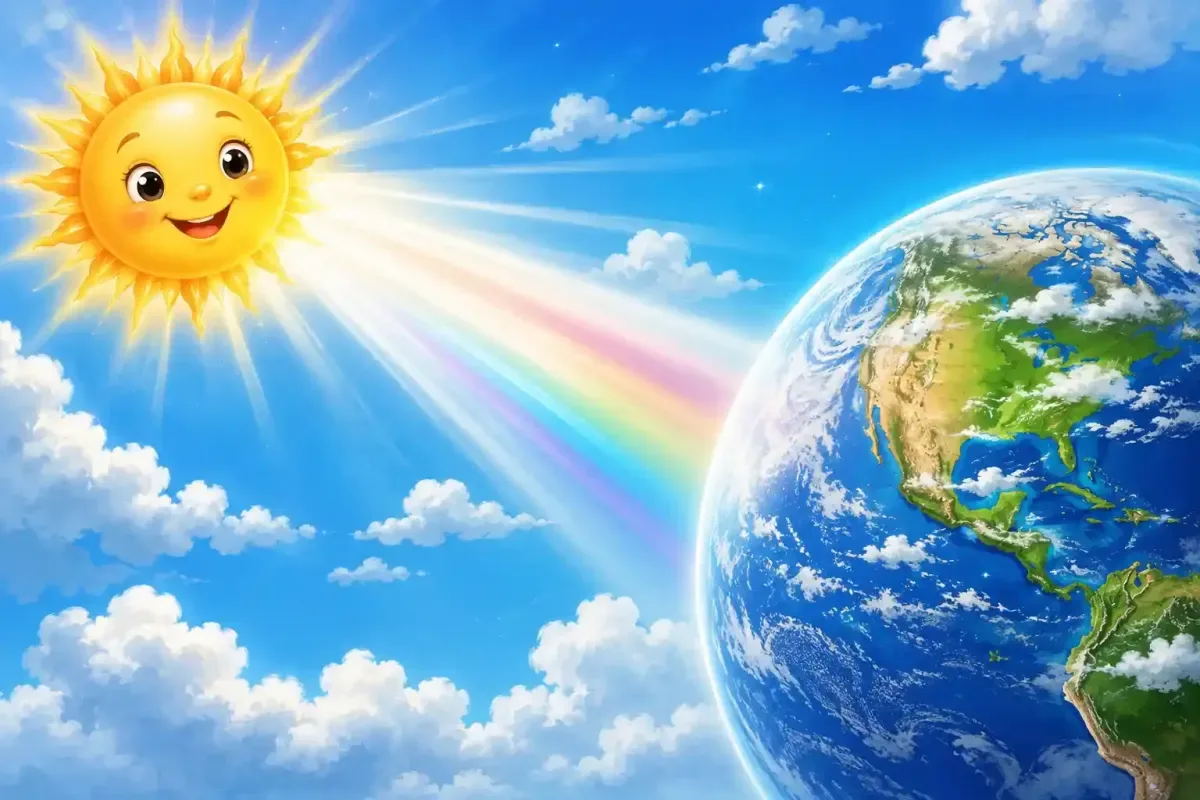
The Sun may look yellow when we see it from Earth, but its light is actually white.
White light is made of many different colors. These colors include red, orange, yellow, green, blue, indigo, and violet. Together, they make the sunlight that brightens our world.
Even though all the colors travel together, they do not all behave the same way when they reach Earth's atmosphere.
Rainbows Give Us a Big Clue
Have you ever seen a rainbow after it rains?
A rainbow gives us an important clue. Tiny drops of water separate white sunlight into all its beautiful colors. That is why we can see every color of the rainbow.
The same sunlight that creates rainbows is also the reason our sky looks blue.

Tiny Air Molecules Spread Blue Light
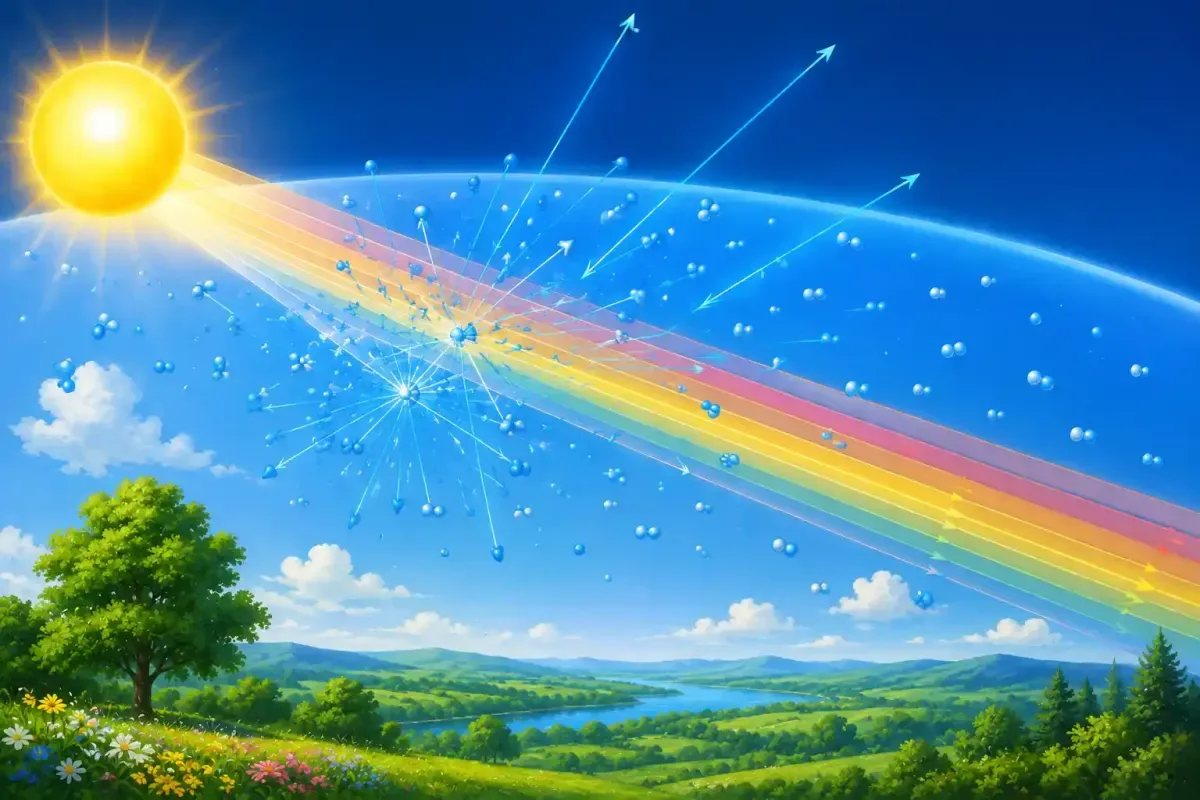
Earth is surrounded by a blanket of air called the atmosphere. Even though we cannot see it, the air is made of tiny particles called molecules.
When sunlight travels through the atmosphere, the blue light is scattered in many directions by these tiny molecules. The other colors continue traveling more easily.
Because blue light spreads across the whole sky, it reaches our eyes from every direction. That is why the sky looks blue during the day.
Why Does the Sky Turn Orange at Sunset?
When the Sun is low in the sky, its light has to travel through much more air before it reaches your eyes.
By the time the light reaches you, most of the blue light has already scattered away.
The colors that continue traveling are mostly orange, red, and yellow. These warm colors fill the sky and create the beautiful sunsets we love to watch.

A Fun Science Word
Scientists have a special name for the way blue light spreads through the atmosphere.
It is called Rayleigh scattering.
You do not have to remember the name, but it helps explain why our sky looks blue almost every day.
Amazing Fun Fact
If Earth had no atmosphere, the daytime sky would look black, just like it does in space.
That is why astronauts see a black sky even when the Sun is shining brightly.
Try It Yourself
The next time you go outside, look up at the sky around lunchtime.
Then look again just before sunset.
Can you see how the colors change?
You have just watched science happening right above your head!
Every time you look up on a sunny day, you are seeing sunlight and Earth's atmosphere working together to create one of nature's most amazing sights.
Great Job!
You reached the end of today's learning adventure!