

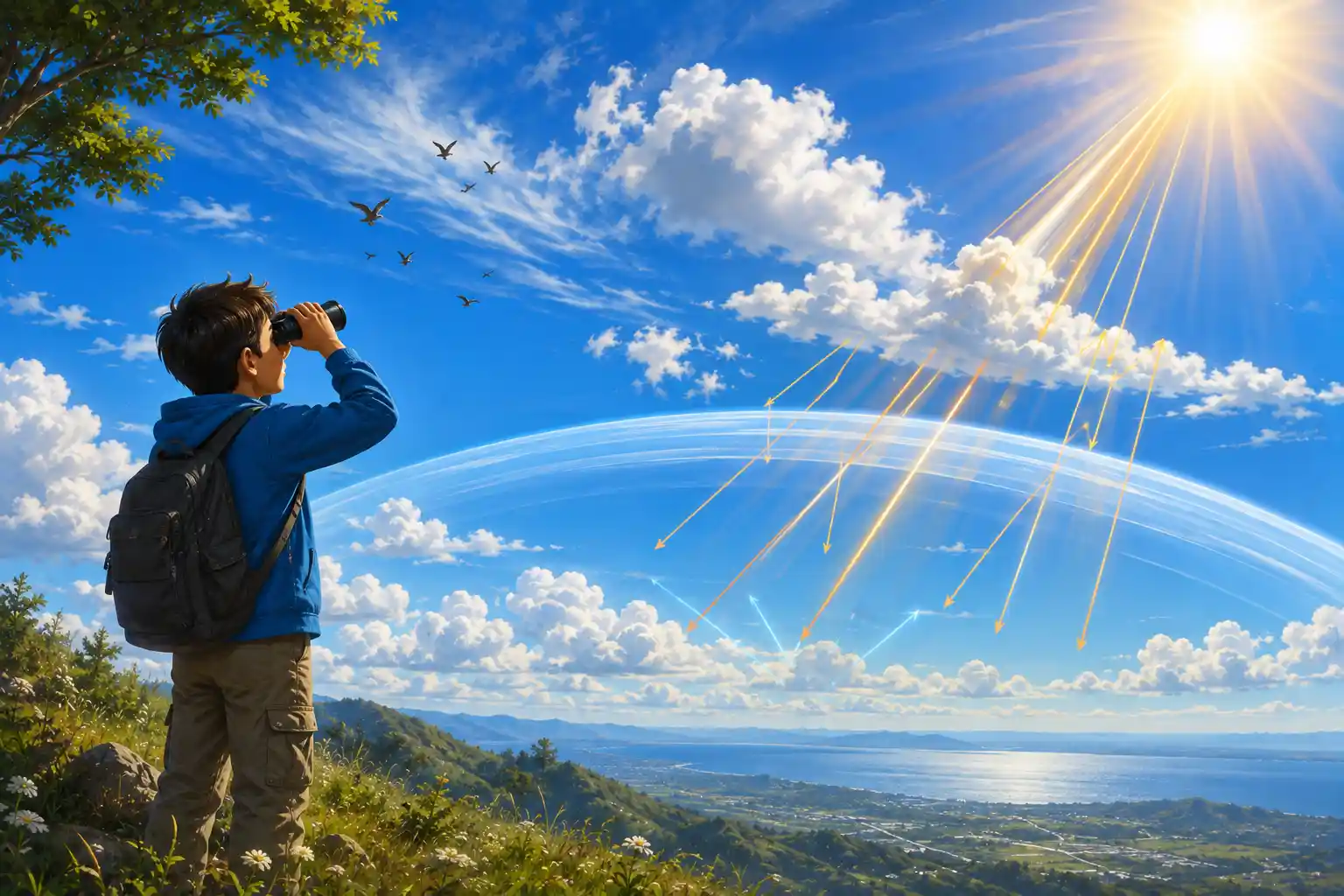
Have you ever looked up at the sky and wondered why it is almost always blue during the day?
Some people once thought the sky looked blue because it reflected the oceans. Scientists now know that the real reason is the way sunlight interacts with Earth's atmosphere.
The explanation is one of the best examples of science happening all around us every single day.
Sunlight Is More Colorful Than It Looks
Sunlight may look white, but it is actually made up of every color in the visible spectrum.
Each color travels as a light wave, and every wave has a different wavelength. Red light has one of the longest wavelengths, while blue and violet light have much shorter ones.
Although all these colors travel together, they do not all behave the same way when they enter Earth's atmosphere.

White Light Contains Every Color
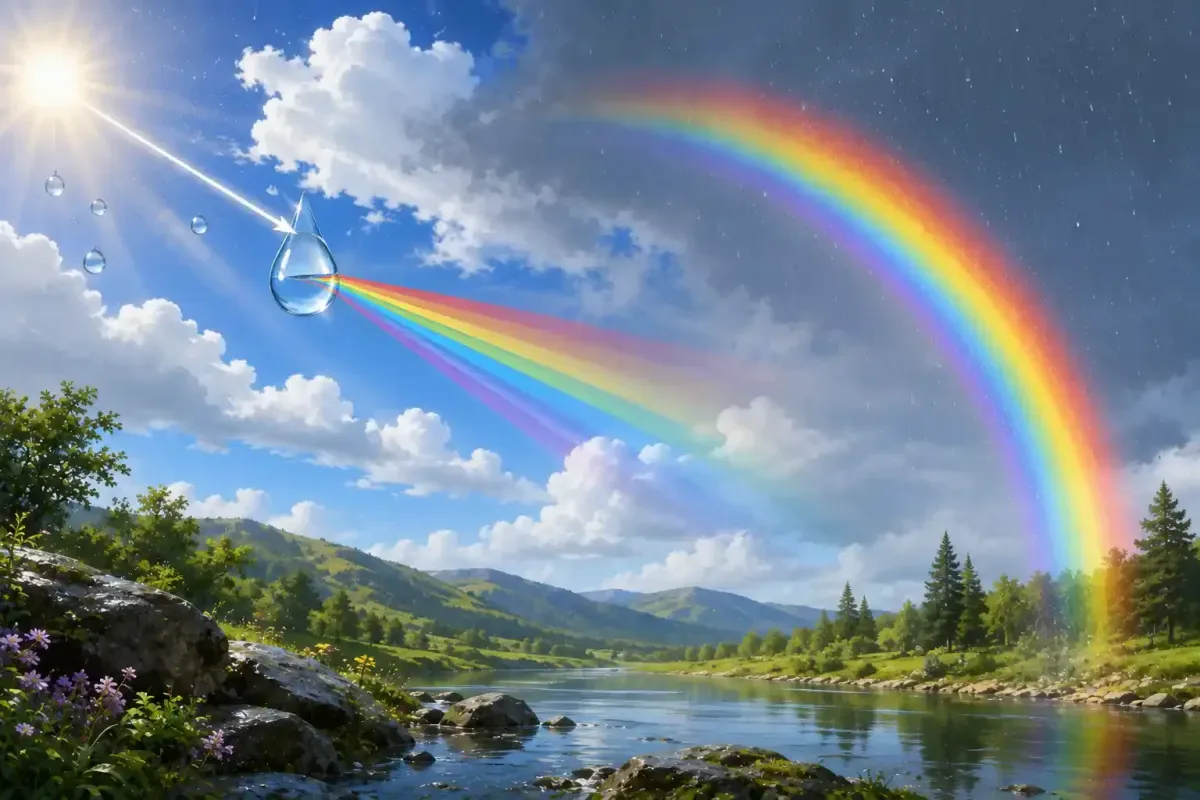
You have probably seen a rainbow after a rainy day.
A rainbow forms when tiny drops of water separate white sunlight into all its different colors.
This shows us that sunlight is not just one color. It is a mixture of all the colors we can see.
The same sunlight that creates a rainbow is also responsible for our beautiful blue sky.
Earth's Atmosphere Changes the Light
Earth is surrounded by a thick layer of gases called the atmosphere. It is made mostly of nitrogen and oxygen.
As sunlight passes through the atmosphere, it bumps into billions of tiny air molecules.
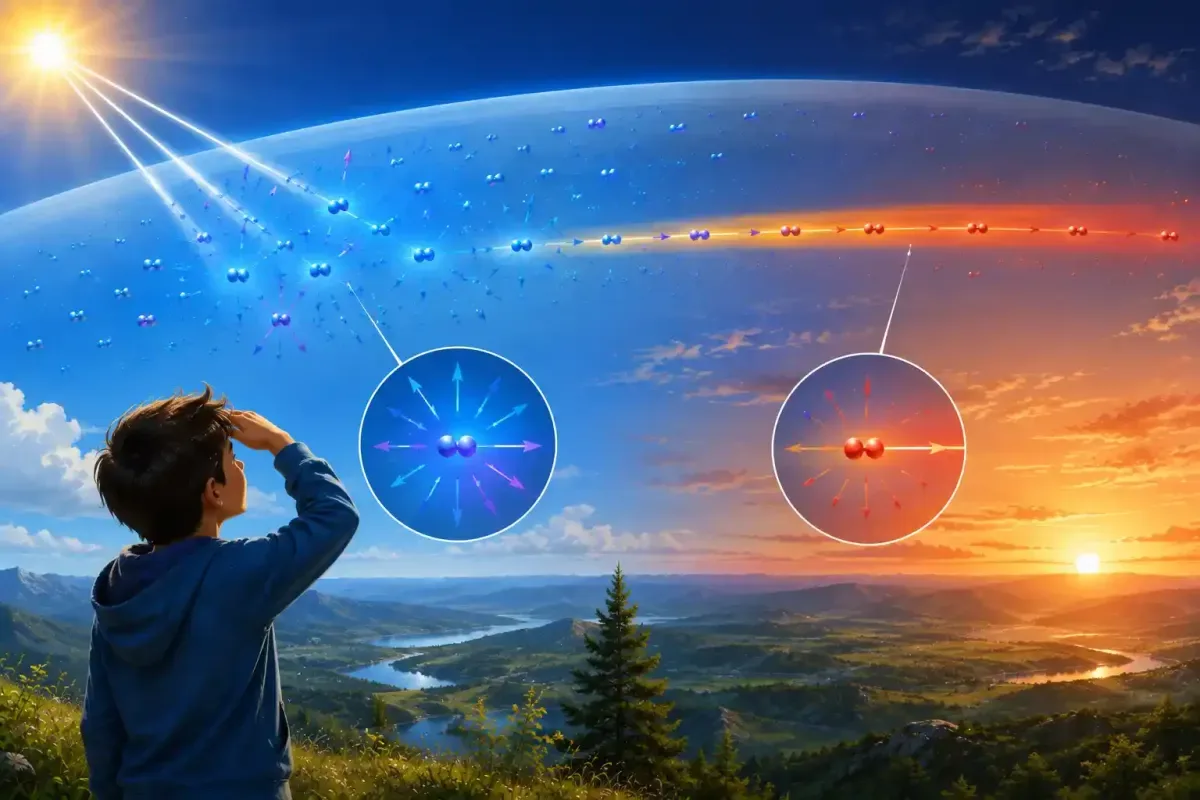
These molecules are much smaller than the wavelengths of visible light. Because of this, they scatter shorter wavelengths, especially blue light, much more effectively than longer wavelengths like red and orange.
Blue light spreads across the entire sky and reaches your eyes from every direction.
That is why the sky appears blue during the day.

Why Is the Sky Blue Instead of Violet?
Here is an interesting question.
If violet light scatters even more than blue light, why is the sky not violet?
There are three reasons.
The Sun gives off less violet light than blue light.
Some violet light is absorbed high in Earth's atmosphere.
Our eyes are much more sensitive to blue light than violet light.
Together, these reasons make the sky appear blue.
Why Do Sunsets Turn Red and Orange?
As the Sun moves closer to the horizon, its light has to travel through much more of Earth's atmosphere.
Along the way, most of the blue light has already scattered away.
The longer wavelengths, including red, orange, and yellow, continue toward your eyes.
That is why sunrise and sunset often fill the sky with warm, glowing colors.

The Science Has a Name
Scientists call this process Rayleigh scattering.
It is named after John William Strutt, 3rd Baron Rayleigh, the British physicist who explained how tiny particles scatter light.
His discovery helps scientists understand why the daytime sky is blue and why sunsets are filled with warm colors.
Amazing Fun Fact
Without Earth's atmosphere, the daytime sky would look black, just as it does in space.
That is why astronauts can see a black sky even while the Sun is shining brightly.

Try It Yourself
On the next sunny day, look at the sky around lunchtime.
Notice how bright blue it is.
Then look again just before sunset.
How have the colors changed?
Think about what you learned. During the day, blue light spreads across the sky. At sunset, most of that blue light has already scattered away, allowing the warm colors to shine through.
Did You Know?
Every time you look up at a blue sky, you are seeing billions of tiny air molecules scattering sunlight in every direction. It is an amazing reminder that science is happening all around us, even on the calmest, sunniest day.
Can You Remember?
What is the main reason the sky looks blue during the day?
Great Job!
You reached the end of today's learning adventure!