
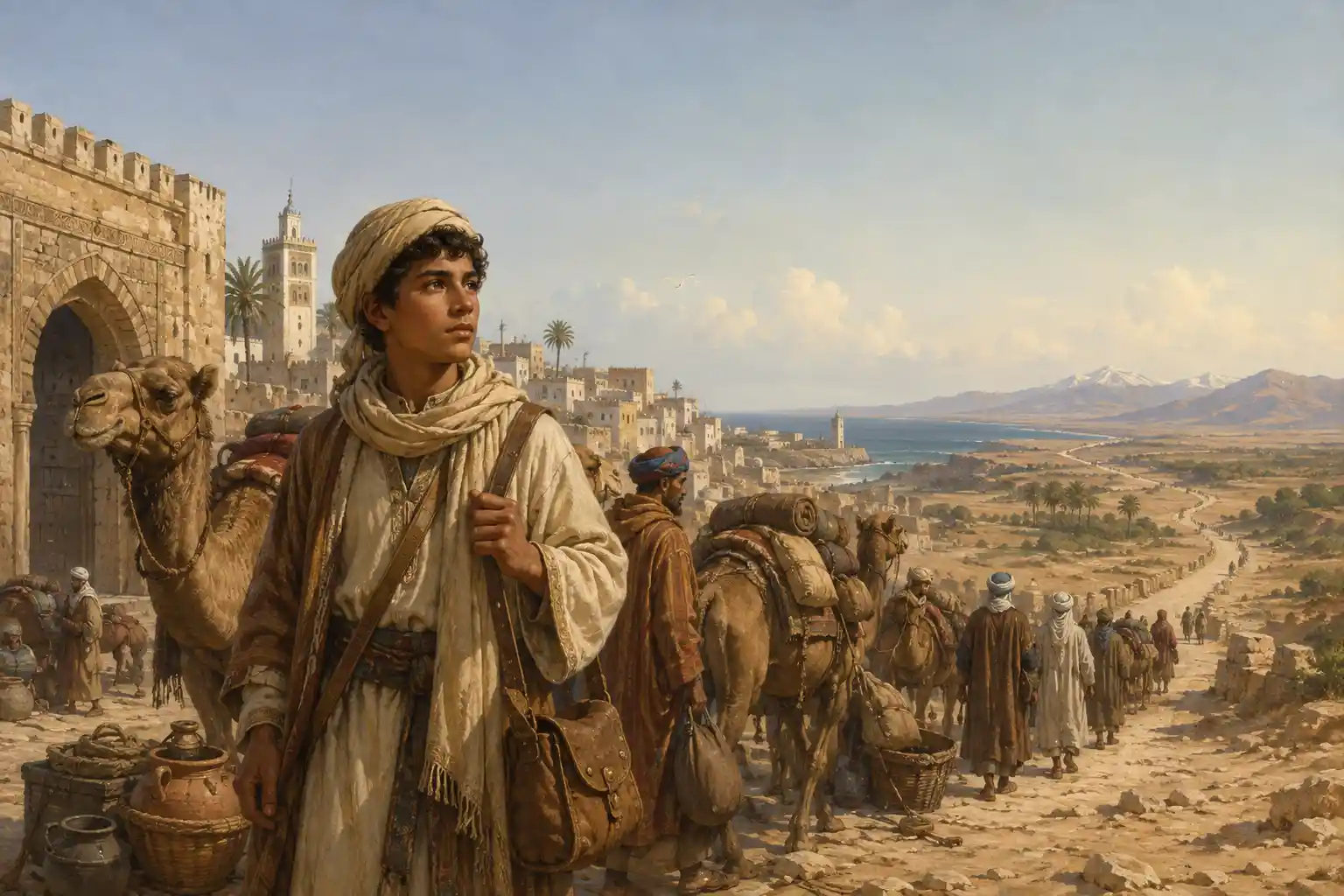
Imagine Traveling Without a Map App
Today, getting lost is usually not a big problem.
You can pull out a phone, open a map, and find your way.
More than 700 years ago, things were very different.
There were no airplanes, GPS devices, or smartphones.
Yet one young man from Morocco traveled across enormous parts of Africa and Asia.
His name was Ibn Battuta.
He became one of the most famous travelers of the medieval world.
A Journey That Was Supposed to Be Simple
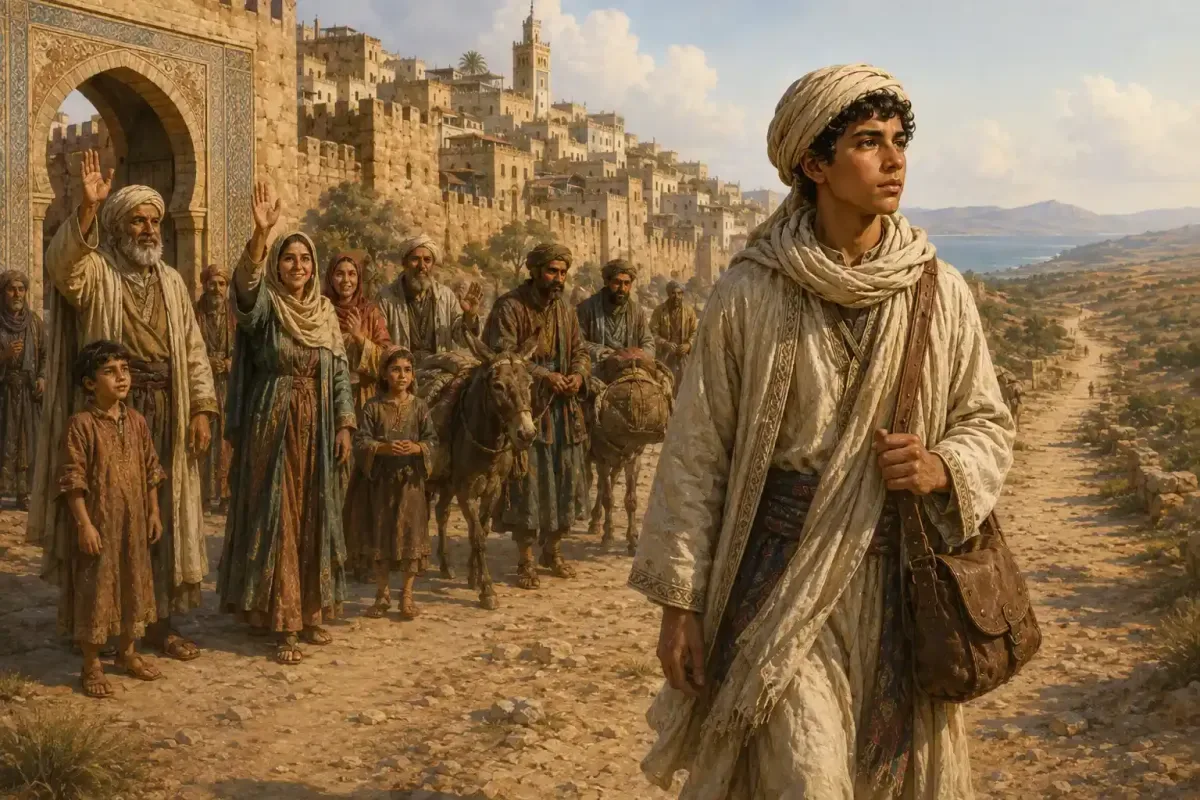
Ibn Battuta was born in Tangier, Morocco, around 1304.
When he was about 21, he left home to make a pilgrimage to Mecca.
At first, he was not planning a lifetime of travel.
But the journey opened his eyes to a much larger world.
He saw cities he had never imagined, met scholars and rulers, and encountered people with different languages, customs, foods, and ways of life.
Instead of simply returning home, he kept going.
His travels eventually took him through North Africa, the Middle East, parts of Europe, Central Asia, India, Southeast Asia, and China. The journey lasted almost three decades.
The World Was His Classroom
Ibn Battuta did not just pass through places.
He paid attention.
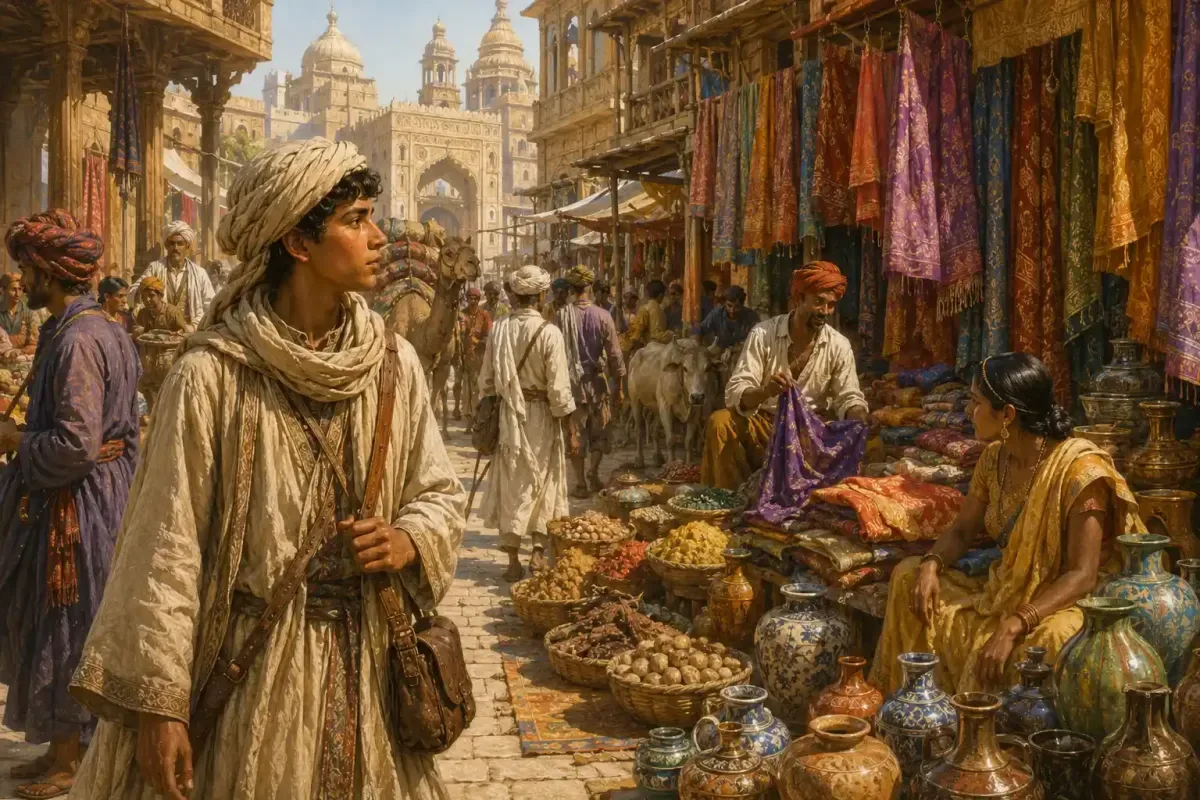
He described markets, buildings, ships, landscapes, foods, religious customs, rulers, and ordinary people.
In India, he spent years at the court of the Delhi Sultan and served as a judge.
Later, he traveled toward Southeast Asia and China.
Think about what that meant.
Every new place was a chance to learn something.
A traveler could learn from a marketplace.
A harbor could reveal how goods moved between countries.
A conversation with a scholar could introduce a new idea.
A meal could reveal something about local culture.
Ibn Battuta's curiosity turned travel into a way of learning.
Roads Were Not Always Easy
Travel in Ibn Battuta's time could be difficult and dangerous.
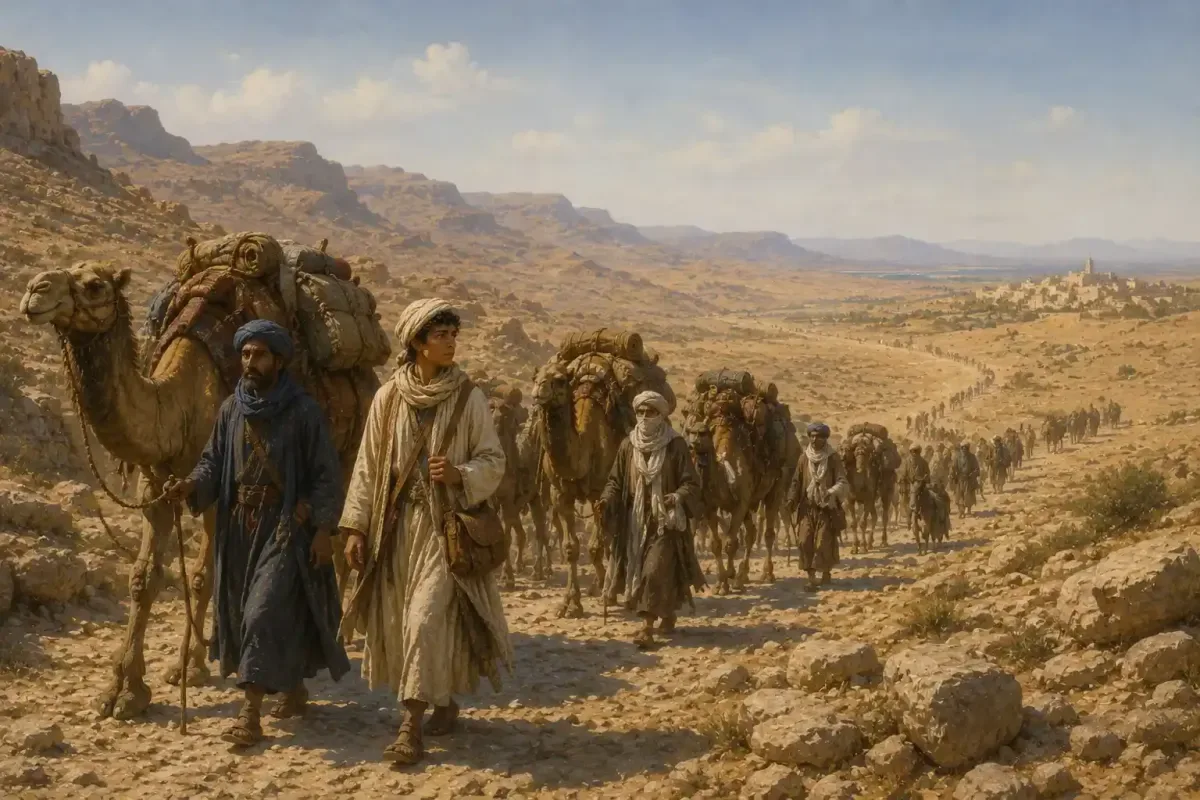
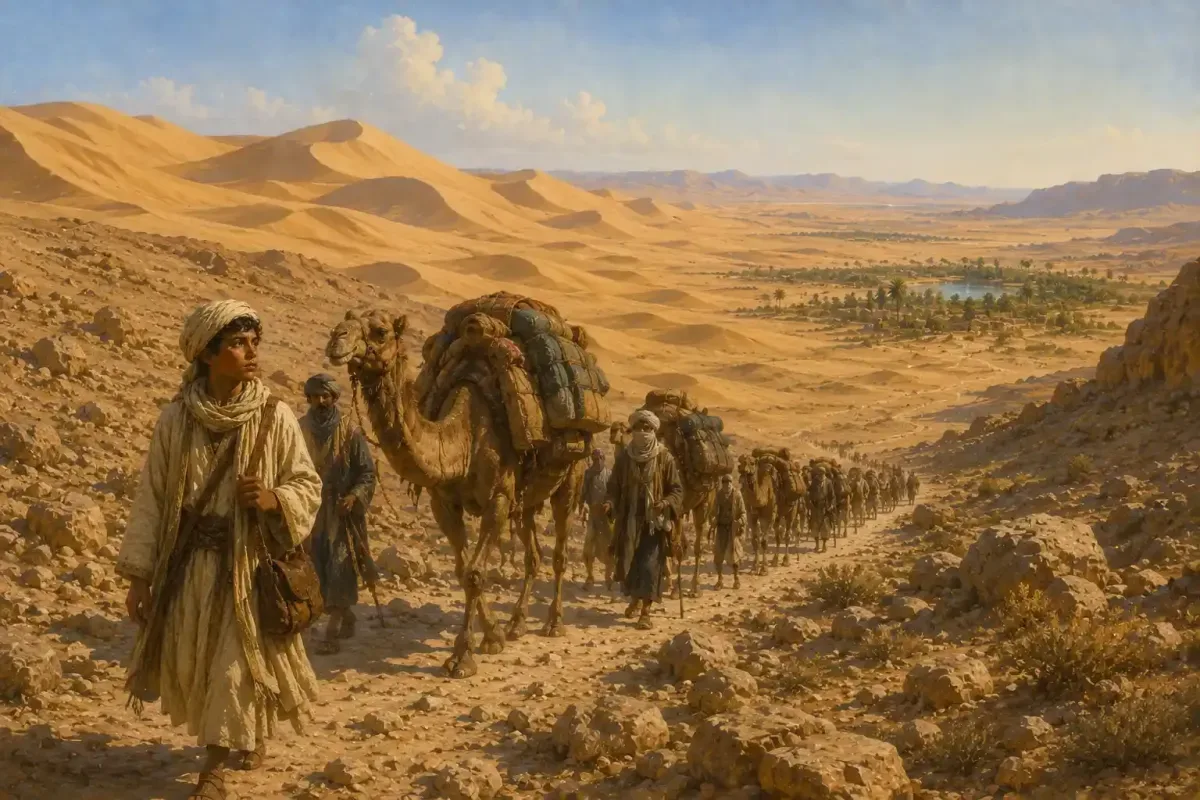
He traveled by camel, on foot, and by ship. Sometimes he joined groups of travelers for protection and companionship.
There were deserts to cross, storms at sea, unfamiliar roads, and long distances between settlements.
Yet the difficulties did not stop him.
In fact, they help us understand just how unusual his journeys were.
He was not traveling simply for sightseeing.
Travel required planning, patience, courage, and a willingness to deal with the unexpected.
A Book Made From Memories
Eventually, Ibn Battuta returned to Morocco.
He had spent years seeing places that were incredibly far from his home.
But how could he share all those experiences?
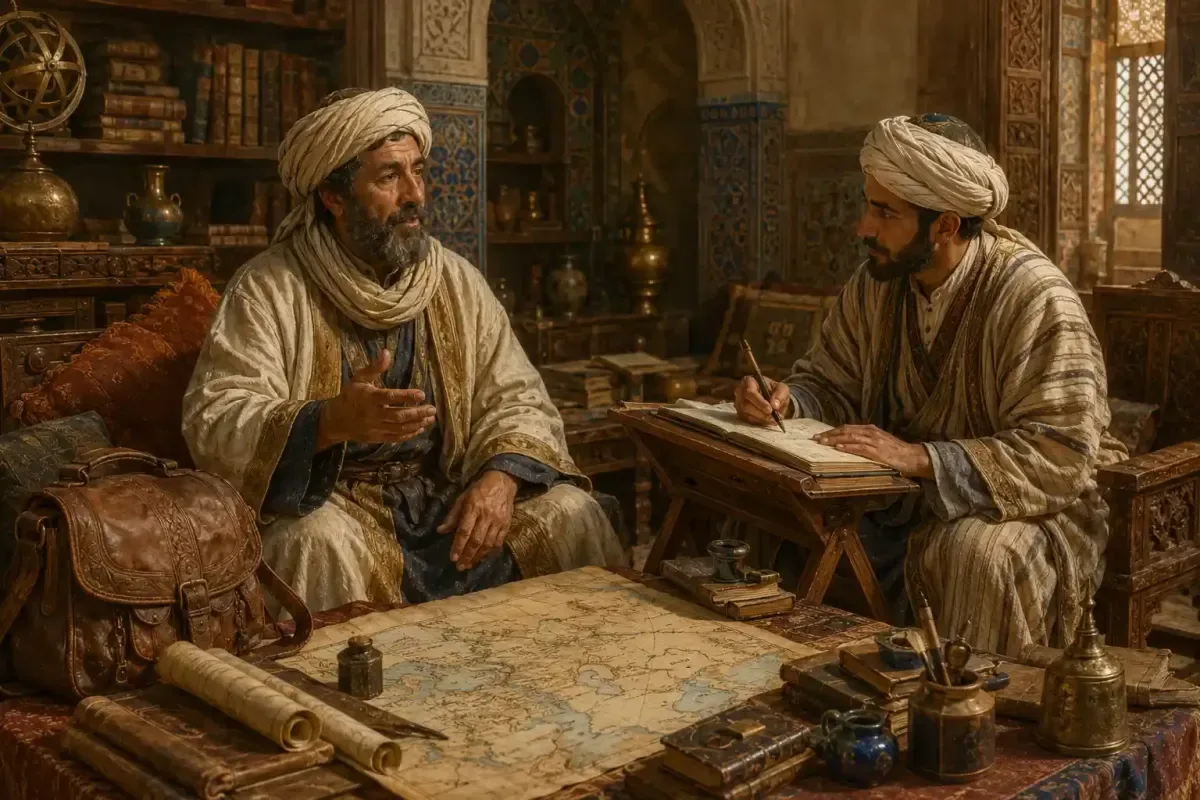
He told his stories to a writer named Ibn Juzayy, who helped put them into written form.
The resulting work became known as the Rihla, an Arabic word meaning "journey."
It became an important record of the medieval world.
The Rihla gives historians valuable descriptions of many places and people.
But there is something important to remember.
A traveler's account is still a traveler's account.
Some details in Ibn Battuta's story are uncertain or have been questioned by historians. That does not make his work useless. Instead, it reminds us that historians compare different sources and ask questions about what they find.
What Makes Ibn Battuta Important?
Ibn Battuta did not "discover" the places he visited.
People already lived there.
Cities already had long histories.
Merchants were already trading.
Scholars were already studying.
Communities had their own languages, traditions, and cultures.
That is an important difference between discovering a place and learning about a place.
Ibn Battuta's great achievement was traveling through a huge part of the known world of his time and recording what he encountered.
His journey helps us imagine how connected different regions already were centuries ago.
Your Turn to Think Like a Traveler
Choose one place in the world you would like to visit.
Do not just find it on a map.
Ask questions.
What do people eat there?
What languages do they speak?
What does the landscape look like?
What is the place's history?
What might you notice there that a map could never tell you?
That is one of the lessons Ibn Battuta's journey leaves us.
A map can show you where a place is. A traveler can help you understand what it is like.
Explorer Challenge
Imagine you are Ibn Battuta.
You have just arrived in a city you have never seen before.
Write down five things you would observe before leaving.
What would you notice first?
What questions would you ask?
What would you want people hundreds of years from now to know?
Can You Remember?
Why did Ibn Battuta first leave his home in Tangier?
Great Job!
You reached the end of today's learning adventure!