


Have you ever heard a song and suddenly felt like dancing?
Maybe a fast song made you want to jump around.
Maybe a gentle song made you feel calm.
Maybe a favorite song made you smile because it reminded you of a happy day.
Music can make us feel different emotions.
But how does that happen?
Let's become music explorers and find out!

Your Ears Send Music to Your Brain
Music begins with sound.
When a singer sings or an instrument plays, vibrations travel through the air.
Your ears collect those vibrations.
Then your brain helps you understand what you hear.
Your brain can notice lots of things at once.
It can tell whether a sound is high or low.
It can notice whether music is loud or quiet.
It can follow the beat.
It can recognize a melody you have heard before.
Your brain is doing a lot of work while you are simply sitting and listening!

Why Does a Beat Make You Want to Move?
A beat is the steady pulse you can hear in many songs.
Try tapping your desk gently.
Tap. Tap. Tap. Tap.
Now imagine a song playing at the same speed.
You can clap along.
You can tap your toes.
You can march.
Your body can follow the beat because your brain is listening for the timing of the sounds.
That is one reason music and movement fit together so well.
Try It!
Play a favorite song.
Tap along with the beat.
Now stop tapping.
Can you still feel where the next beat should happen?
Your brain may be keeping track even when your hands are still!

Fast Music and Slow Music Feel Different
Listen to a very fast song.
It might make you want to run, jump, or dance.
Now imagine a slow song.
You might want to sway gently or move more slowly.
The speed of music is called tempo.
Tempo simply means how fast or slow the music goes.
Musicians can change the tempo to make music feel different.
A quick tempo can make a song feel energetic.
A slow tempo can make it feel peaceful.
Music Experiment
Choose two songs.
Pick one that is fast and one that is slow.
Move your body along with each one.
How does your movement change?

Can Music Sound Happy or Calm?
Music does not have one special "happy sound" or "sad sound."
People can react to the same song in different ways.
Still, musicians can use different musical choices to create different moods.
A bright, quick melody might sound cheerful or energetic.
Soft sounds and slower music might feel peaceful.
Strong drums can make music sound powerful.
A gentle piano melody might sound calm.
The instruments, rhythm, tempo, volume, and melody can all work together.
That is what makes music so interesting.
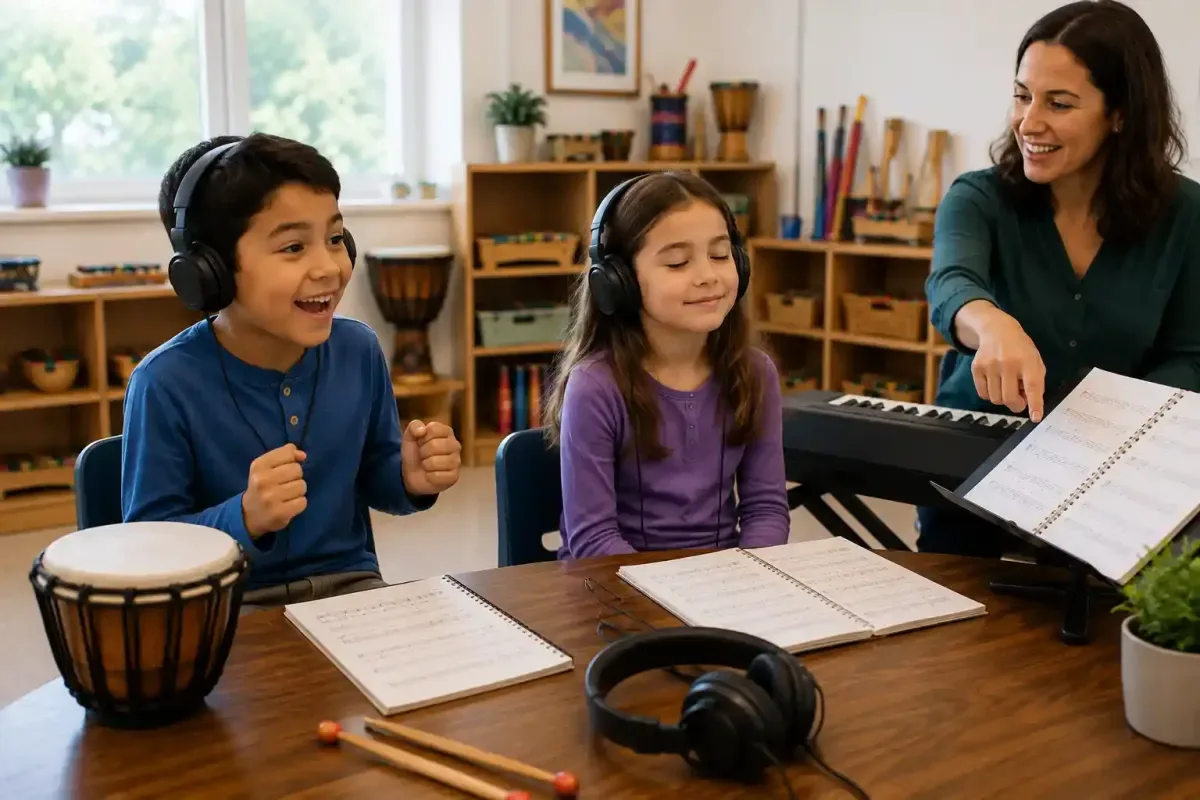
Why Do Songs Get Stuck in Your Head?
Have you ever heard a song and then found yourself humming it later?
That can happen because your brain is good at remembering patterns.
Songs often repeat parts of their melody, rhythm, or words.
When you hear the same pattern again and again, your brain gets more chances to remember it.
Sometimes a small piece of a song keeps playing in your thoughts.
People often call this an earworm.
Don't worry.
There isn't actually a worm in your ear!
It's simply your brain remembering a piece of music.

Music Lessons Are a Brain Workout
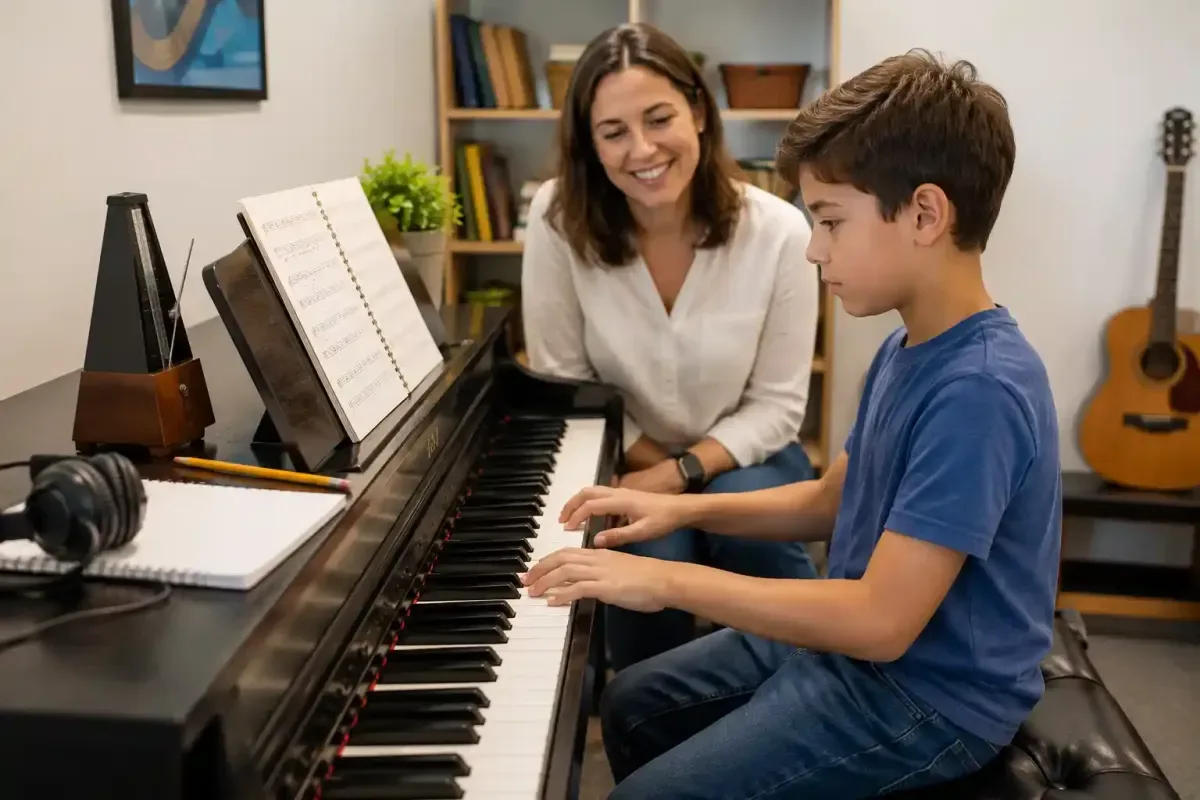
Learning an instrument takes practice.
Imagine learning piano.
You have to read notes.
Your eyes look at the music.
Your brain figures out which notes to play.
Your fingers move to the right keys.
Your ears listen to the sounds.
You also need to keep the beat.
That's a lot to do!
Learning drums, guitar, violin, singing, or another instrument can involve many of the same skills.
You listen.
You remember.
You coordinate.
You practice.
And you improve.
Music and Dance Work Together
Music and dance may look like two different activities, but they have a lot in common.
Both use rhythm.
Both use timing.
Both require you to pay attention to changes.
A dancer listens for the beat and moves with it.
A musician listens to the timing and plays along.
Try watching someone dance to a song.
Can you see how their movements match the music?
Now listen to the same song without watching.
Can you imagine movements that would fit the beat?
Your ears and body can work together in amazing ways.

Become a Music Scientist
Now it is your turn to investigate.
Choose a song you know.
Listen once without doing anything else.
Then listen again.
This time, listen only for the beat.
Listen again and focus on the melody.
Then listen for the instruments.
What did you notice?
Maybe you heard something you never noticed before.
That's what happens when you listen carefully.
The more attention you give music, the more details you can discover.
Make Your Own Rhythm
You don't need a fancy instrument to create music.
Try this pattern:
Clap, clap, tap.
Now make a new one.
Tap, clap, tap, clap.
Can a friend copy you?
Now let your friend create a rhythm for you.
See if you can copy it correctly.
Make it easier first.
Then make it trickier!

Your Music Challenge
Choose one song and see if you can find:
- The beat.
- The melody.
- A repeating rhythm.
- Two different instruments.
- A fast or slow section.
- A loud or quiet section.
Then create your own short rhythm.
You just became a music explorer!
Why Music Is So Much Fun
Music gives your brain patterns to discover.
It gives your ears sounds to explore.
It gives your body rhythms to follow.
And it gives your imagination room to create.
You can listen to music.
You can play music.
You can sing.
You can dance.
You can make your own rhythms.
There is always something new to discover.
So next time you hear a song, don't just hear it.
Listen closely.
What can you find?
Can You Remember?
What is tempo in music?
Great Job!
You reached the end of today's learning adventure!